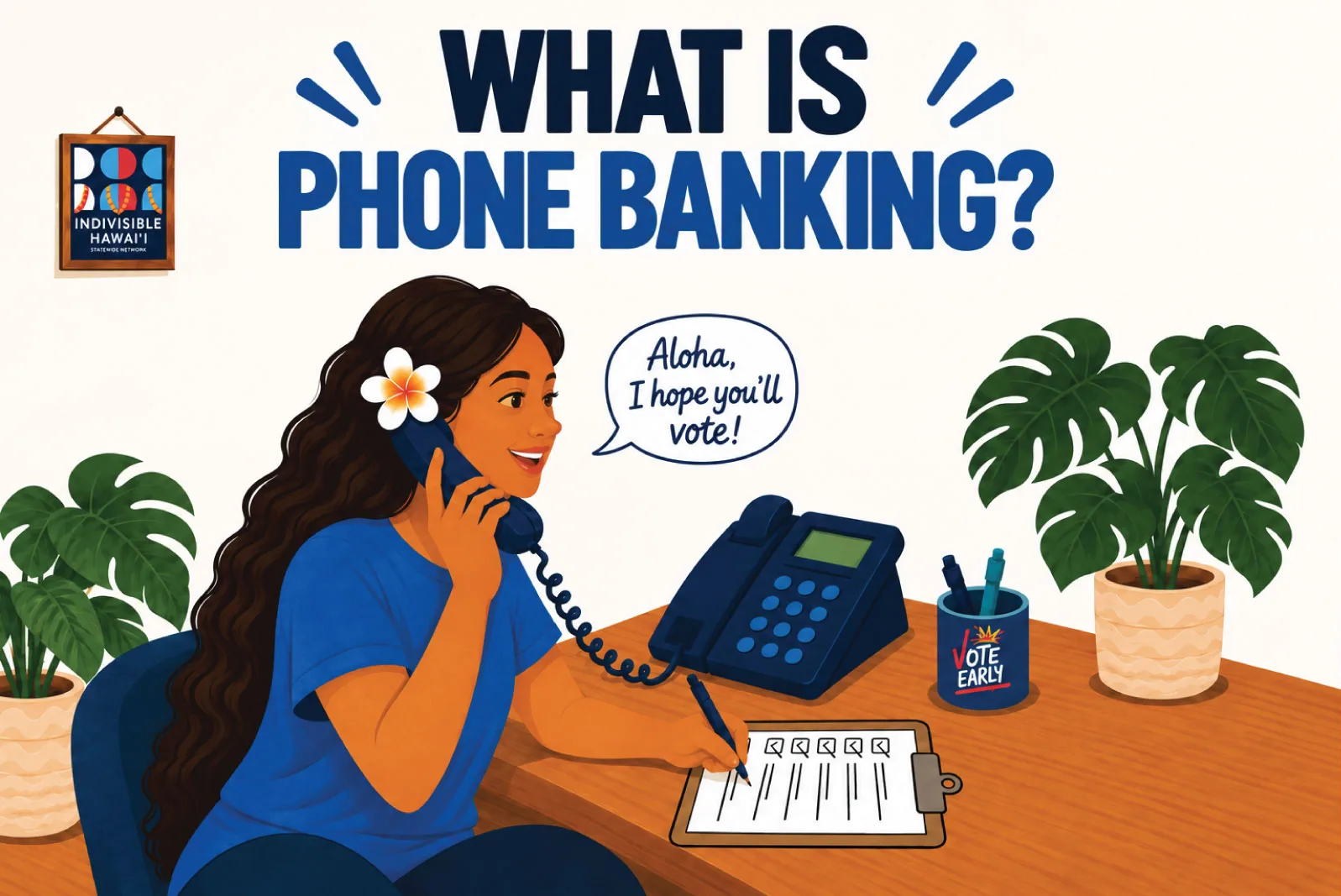
Phone banking is one of the most effective tools grassroots organizations like Indivisible have. Research shows that a good-faith conversation with a real person (even a stranger) is more persuasive than any ad, mailer, or automated message. When volunteers make calls, it moves people.
What phone banking is used for
Phone banking campaigns can have different goals depending on the moment: encouraging people to vote, recruiting new volunteers, spreading the word about an issue, or identifying supporters. Your chapter will let you know what a specific campaign is focused on.
What actually happens on a call
When you join a phonebanking campaign, you’ll be given a list of phone numbers and a script — a short guide for what to say and how to handle common responses. You don't have to memorize it or follow it word for word; it's there so you're not starting from scratch. Most calls are brief: many people don't answer, some aren't interested, and some will be genuinely glad you called.
You’ll get a list of phone numbers, so you can walk through the list one call at the time; you log the result of each call (answered, voicemail, wrong number, etc.) as you go.
What to expect as a first-timer
It can feel awkward at first; most people aren't used to calling strangers. Thankfully, phone banks are often run as group events (in person or virtually), so you're not doing it alone. You'll get a brief training before you start, and there's usually a host available if you get a tricky call. After the first few calls, most people find it much more manageable than they expected.
How to get started
Phone banking campaigns are organized at the chapter level. Join your local chapter to find out about upcoming phone banks and sign up for a shift.