Can a state decide that the corporations it creates have no power to spend money on elections? Hawaiʻi says yes.
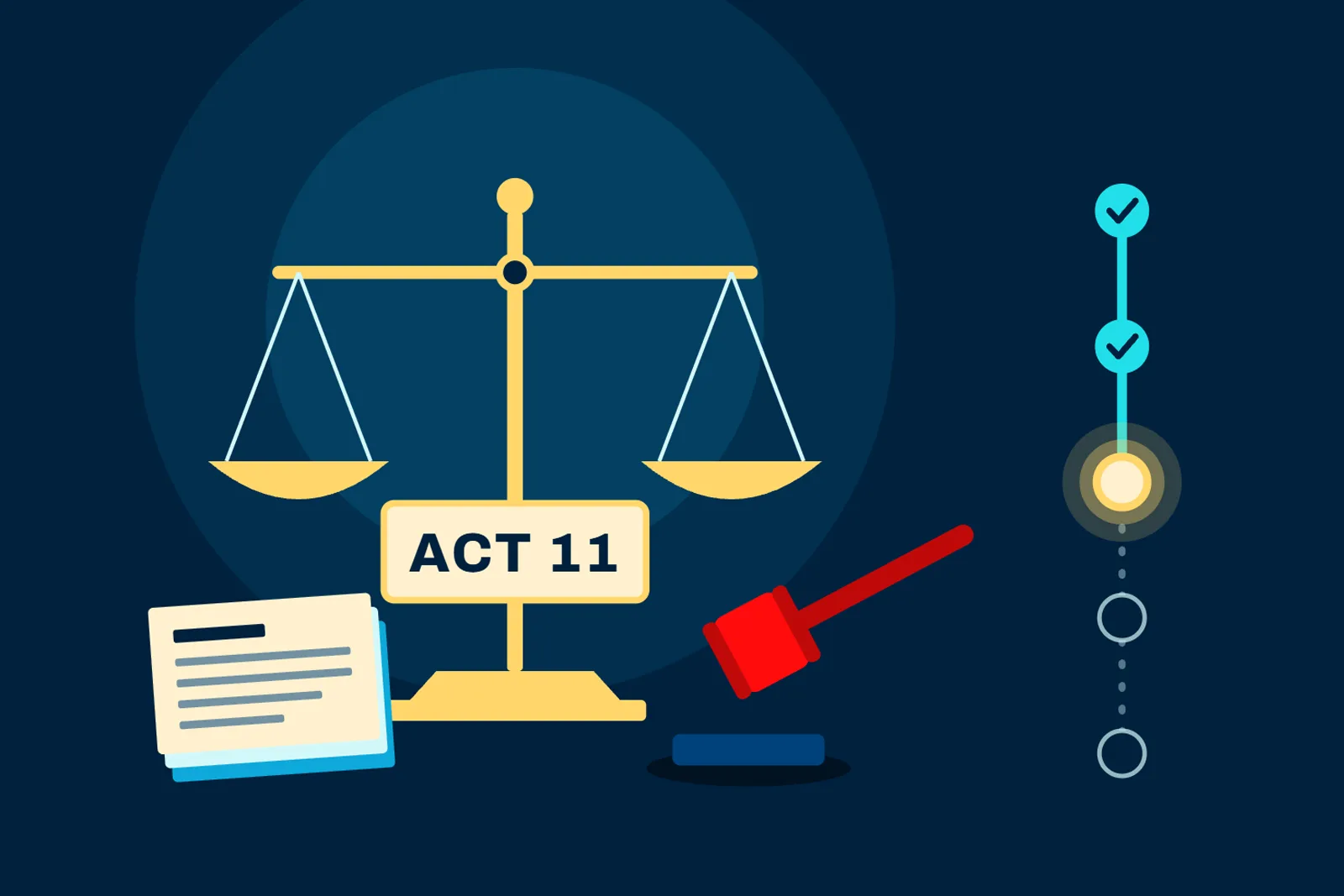
Act 11, signed by Governor Josh Green on May 14, 2026, is the state’s response to Citizens United, the 2010 U.S. Supreme Court ruling that opened the door to unlimited corporate spending in American elections. Hawaiʻi is the first state to pass a law of this kind. At the Indivisible Hawaiʻi Statewide Network, we call it Sunshine over dark money.
Two federal lawsuits now challenge Act 11. This page tracks where both cases stand, what each side argues, and every significant public filing.
Act 11 lawsuits at a glance
Where both cases stand as of October 9, 2026.
Grassroot Institute case: Motions fully briefed; hearing Tuesday, October 13, 2026
U.S. Chamber of Commerce case: Motion for a preliminary injunction pending; hearing on the motion Thursday, November 19, 2026
Act 11 takes effect: July 1, 2027, unless a court blocks it
Latest update
New developments appear here as they happen, newest first.
October 9, 2026: Briefing is complete in the Grassroot Institute case, and three outside groups have weighed in, two supporting the State and one supporting the challenger.
October 5, 2026: The U.S. Chamber of Commerce case has been reassigned to Senior U.S. District Judge Leslie E. Kobayashi, so one judge now oversees both lawsuits. A hearing on its motion for a preliminary injunction is set for Thursday, November 19, 2026.
For a quick update before the first hearing, watch this recent webinar with State Representative Della Au Belatti and Tom Moore of the Center for American Progress, who walk through the legal proceedings so far.
What Act 11 does
Act 11 (introduced as Senate Bill 2471, or SB 2471) says that the powers Hawaiʻi grants to corporations, limited liability companies (LLCs), partnerships, nonprofit corporations, and similar entities do not include spending money, or giving anything of value, to influence candidate elections or ballot measures. The rule applies equally to out-of-state companies doing business in Hawaiʻi. Bona fide news, commentary, and editorials are exempt.
Since Citizens United, outside groups have spent billions on federal elections. Much of that money flows through super PACs, which can raise unlimited sums, and through nonprofits that never disclose their donors, often called dark money. Act 11 takes a different route from disclosure rules: it limits what corporations chartered or operating in Hawaiʻi are allowed to do in the first place.
For a full overview of the law, see our explainer from when it passed: How Act 11 (SB 2471) limits corporate political spending in Hawaiʻi →
The two lawsuits challenging Act 11
A Hawaiʻi think tank and a national business group have filed separate suits to stop Act 11 in the U.S. District Court for the District of Hawaii. Each names Attorney General Anne E. Lopez and Nadine Y. Ando, Director of the Department of Commerce and Consumer Affairs (DCCA), as defendants and asks the court to block the law before it takes effect on July 1, 2027.
Grassroot Institute of Hawaii v. Lopez
The Grassroot Institute of Hawaii, represented by the Institute for Free Speech, sued on June 5, 2026. It asked the court for a preliminary injunction, an order that would pause Act 11 while the case is decided. The State responded with a motion to dismiss, which asks the court to end the case early on the grounds that the law is constitutional as written. Senior U.S. District Judge Leslie E. Kobayashi is presiding.
Chamber of Commerce of the United States v. Lopez
On September 24, 2026, the U.S. Chamber of Commerce filed a second, separate challenge, also seeking a preliminary injunction. It argues that Act 11 bans speech based on its content and viewpoint, places an unconstitutional condition on doing business in Hawaiʻi, and reaches too broadly. The case was first assigned to Judge Jill A. Otake and has since been reassigned to Senior U.S. District Judge Leslie E. Kobayashi, who also oversees the Grassroot case. A hearing on the motion for a preliminary injunction is set for Thursday, November 19, 2026, followed by a scheduling conference on November 23.
What each side argues
The core dispute is whether Act 11 regulates speech or regulates corporate powers.
The State of Hawaiʻi argues that the law defines which powers a state grants to entities it creates. Corporations exist only because state law allows them to, so the State says Citizens United does not apply. The plaintiffs argue that corporations have free speech rights under the First Amendment, that Citizens United decides this case, and that the State cannot strip those rights by redefining corporate powers. Judge Leslie E. Kobayashi will rule first on which view holds up.
What happens after the October 13 hearing
On October 13, 2026, the U.S. District Court in Honolulu will hear the Grassroot Institute’s request for a preliminary injunction and the State’s motion to dismiss together. There are three likely outcomes:
If the motion to dismiss is granted, the Grassroot case ends at this stage, though the plaintiffs could appeal to the U.S. Court of Appeals for the Ninth Circuit. The U.S. Chamber of Commerce case would continue on its own track.
If the preliminary injunction is granted, Act 11 is blocked while the case proceeds. The State would likely appeal to the Ninth Circuit.
If both are denied, the case moves into ordinary litigation and the law stays on schedule to take effect July 1, 2027.
Judges sometimes rule from the bench, but a written order usually follows days or weeks later. We’ll update this page when it arrives. Whichever side loses is widely expected to appeal, and many observers see a likely path to the U.S. Supreme Court.
Why other states are following Hawaiʻi’s case
The ruling could shape efforts well beyond Hawaiʻi. In Montana, I-194, known as the Montana Plan, would limit the political spending powers of corporations doing business in the state, much as Act 11 does here. Roughly 14 other states have similar legislation or constitutional amendments pending.
For deeper background, see The Corporate Power Reset from the Center for American Progress. It covers the legal theory, includes a Q&A video and answers about Hawaiʻi’s law, and keeps the most complete running collection of national news and analysis.
How Maine’s super PAC case takes a different approach
A separate case in Maine, now on appeal to the U.S. Court of Appeals for the First Circuit, takes a different approach to big money in politics. Maine voters approved limits on contributions to super PACs. Defenders of that law are asking the courts to reconsider SpeechNow v. FEC, the 2010 appeals court decision that allowed super PACs to accept unlimited contributions.
Act 11 doesn’t ask any court to overturn precedent. It works within Citizens United by addressing corporate powers instead. The two strategies complement each other, and both cases could end up before the U.S. Supreme Court.
News coverage and analysis
- Honolulu Star-Advertiser, July 24, 2026: Hawaii, others push back: money not political speech
- Wall Street Journal, July 1, 2026: In defense of Hawaii’s corporate redefinition
- Bloomberg Law, May 29, 2026: Hawaii’s new law on corporate donations is a model for US states
- The American Prospect, May 18, 2026: Hawaii just found a way to keep corporations out of politics
- The Atlantic, May 14, 2026: Hawaii vs. Citizens United
Act 11 court filings
Filings are listed newest first. Numbers in brackets are the court’s electronic case filing (ECF) docket numbers. An amicus brief is a filing from an outside group that isn’t a party to the case but wants to inform the court’s decision.
Grassroot Institute of Hawaii v. Lopez filings
U.S. District Court for the District of Hawaii, No. 1:26-cv-00279, Senior U.S. District Judge Leslie E. Kobayashi. Full docket →
- Sep 29, 2026 [47]: Notice of Related Case (flags the U.S. Chamber of Commerce lawsuit)
- Sep 25, 2026 [46]: State’s Reply in Support of Motion to Dismiss
- Sep 25, 2026 [45]: Grassroot’s Reply in Support of Preliminary Injunction
- Sep 24, 2026 [44]: Amicus brief, Campaign Legal Center and Citizens for Responsibility and Ethics in Washington (CREW), supporting the State
- Sep 23, 2026 [43]: Amicus brief, American Civil Liberties Union (ACLU), supporting the challenger
- Sep 22, 2026 [35]: Amicus brief, Center for American Progress, supporting the State
- Sep 11, 2026 [25]: Grassroot’s Opposition to Motion to Dismiss
- Sep 11, 2026 [24]: State’s Opposition to Preliminary Injunction
- Aug 20, 2026 [22-1]: State’s Memorandum in Support of Motion to Dismiss
- Aug 20, 2026 [22]: State’s Motion to Dismiss
- Jun 19, 2026 [15-1]: Grassroot’s Memorandum in Support of Preliminary Injunction
- Jun 19, 2026 [15]: Motion for Preliminary Injunction
- Jun 5, 2026 [1]: Complaint
Chamber of Commerce of the United States v. Lopez filings
U.S. District Court for the District of Hawaii, No. 1:26-cv-00497, Senior U.S. District Judge Leslie E. Kobayashi. Docket →
- Sep 24, 2026 [10]: Motion for Preliminary Injunction (hearing set for November 19, 2026)
- Sep 24, 2026 [1]: Complaint for Declaratory and Injunctive Relief
The law’s text and model legislation
- Senate Bill 2471 (2026), Act 11, Hawaiʻi State Legislature, signed May 14, 2026
- Annotated model bill from the Center for American Progress, August 2026
Follow the case
We’ll keep this page current as the judges rule and new filings come in. To hear about each ruling as it happens, along with the week’s state and national news, sign up for our Sunday newsletter. If you know someone who cares about getting corporate money out of Hawaiʻi elections, share this page with them.