
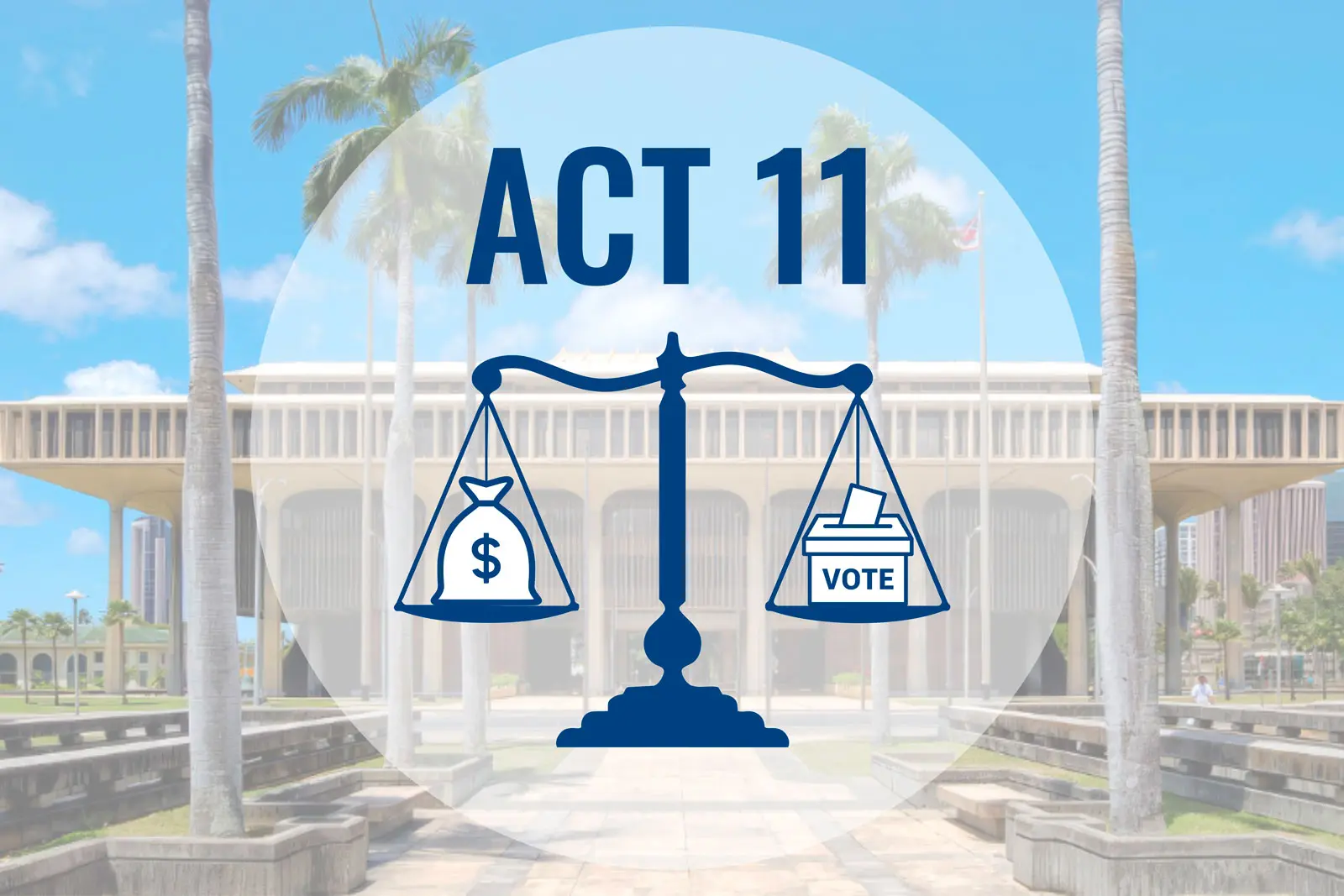
In May 2026, Hawaiʻi became the first state to directly counter the Supreme Court's Citizens United v. FEC decision by passing Act 11 (formerly SB 2471). The law removes the power of corporations and other artificial entities to spend money on political campaigns.
Rather than challenging Citizens United head-on, Hawaiʻi took a different approach: changing what powers corporations have in the first place.
Corporations are state creations
Since 1819, US law has been clear that corporations are "artificial entities" created under state law. They only have the powers that states grant them. They're not natural persons; they're legal constructs that exist because state legislatures allow them to exist.
If the state gives you permission to operate a business as a corporation, the state can also set the rules for what that corporation can and cannot do. The Supreme Court's Citizens United decision treated corporations as having all the same rights as natural persons, including political speech. But what if states simply never granted corporations political rights in the first place?
What Act 11 does
Act 11 amends Hawaiʻi Revised Statutes §414-42, which defines corporate powers.
Before and after Act 11
Before Act 11, the law said:
"Unless its articles of incorporation provide otherwise, every corporation has ... the same powers as an individual to do all things necessary or convenient to carry out its business and affairs..."
This language gave corporations the same general powers as natural persons, which the Citizens United court interpreted to include political spending.
After Act 11, the law now says:
"(a) The creation and continued existence of a corporation shall not be deemed a right but shall be a conditional grant of legal status by this State and shall remain subject to complete withdrawal at any time.
(b) Beginning July 1, 2027, a corporation operating under the jurisdiction of this State shall not have the power to expend moneys on or participate in any election activity or ballot-issue activity. Under no circumstances shall any election activity or ballot-issue activity be deemed necessary or convenient for a corporation's lawful purpose or affairs."
In plain language: from July 2027 onwards, corporations in Hawaiʻi no longer have the legal power to spend money on elections or political campaigns. The state has removed that power from the corporate charter.
The law applies to all corporations operating in Hawaiʻi — whether they were formed here or are doing business under Hawaiʻi law. It also includes similar restrictions for other business forms like LLCs and nonprofits.
The nuance: corporations' rights in Hawaiʻi
Act 11 doesn't challenge the Citizens United ruling directly; instead, it undercuts the premise.
Citizens United said that if corporations have the same powers as people, they have the same free speech rights — including spending money on politics.
Act 11 says: fine, but in Hawaiʻi, corporations don't have the same powers as people. Political activity simply isn't part of what a company is allowed to do here.
It's a state-level workaround that uses a well-established principle of corporate law: states control what corporations can do.
What about unions and nonprofits?
During the legislative process, some labor unions and nonprofits raised concerns about how Act 11 would affect their political activity. The law does apply to them: unions and nonprofits are also "artificial entities" created under state law. However, they can return to operating under the rules that existed before Citizens United, when business and labor operated on a much more level playing field with everyone constrained by the same campaign finance laws.
What this means for campaigns in Hawaiʻi
Starting July 1, 2027:
- Corporations can no longer spend money on Hawaiʻi political campaigns
- Corporate-funded Super PACs cannot operate in Hawaiʻi elections
- Shell nonprofits used to hide donor identities cannot funnel money into Hawaiʻi campaigns
- The political playing field becomes more level between individual donors and corporate interests
Traditional PACs — which pool individual donations from employees or members — can still operate, as they always have, with proper disclosure and contribution limits.
The national precedent
The Associated Press covered Act 11's passage nationally, recognizing Hawaiʻi as the first state to take this approach. If the law survives court challenges, it provides a roadmap for other states to limit dark money and corporate political spending without waiting for Congress or the Supreme Court to act.
Hawaiʻi didn't just pass a law. It created a new strategy for campaign finance reform.
→ Learn more about what dark money is
→ Read how IHSN made Act 11 happen
