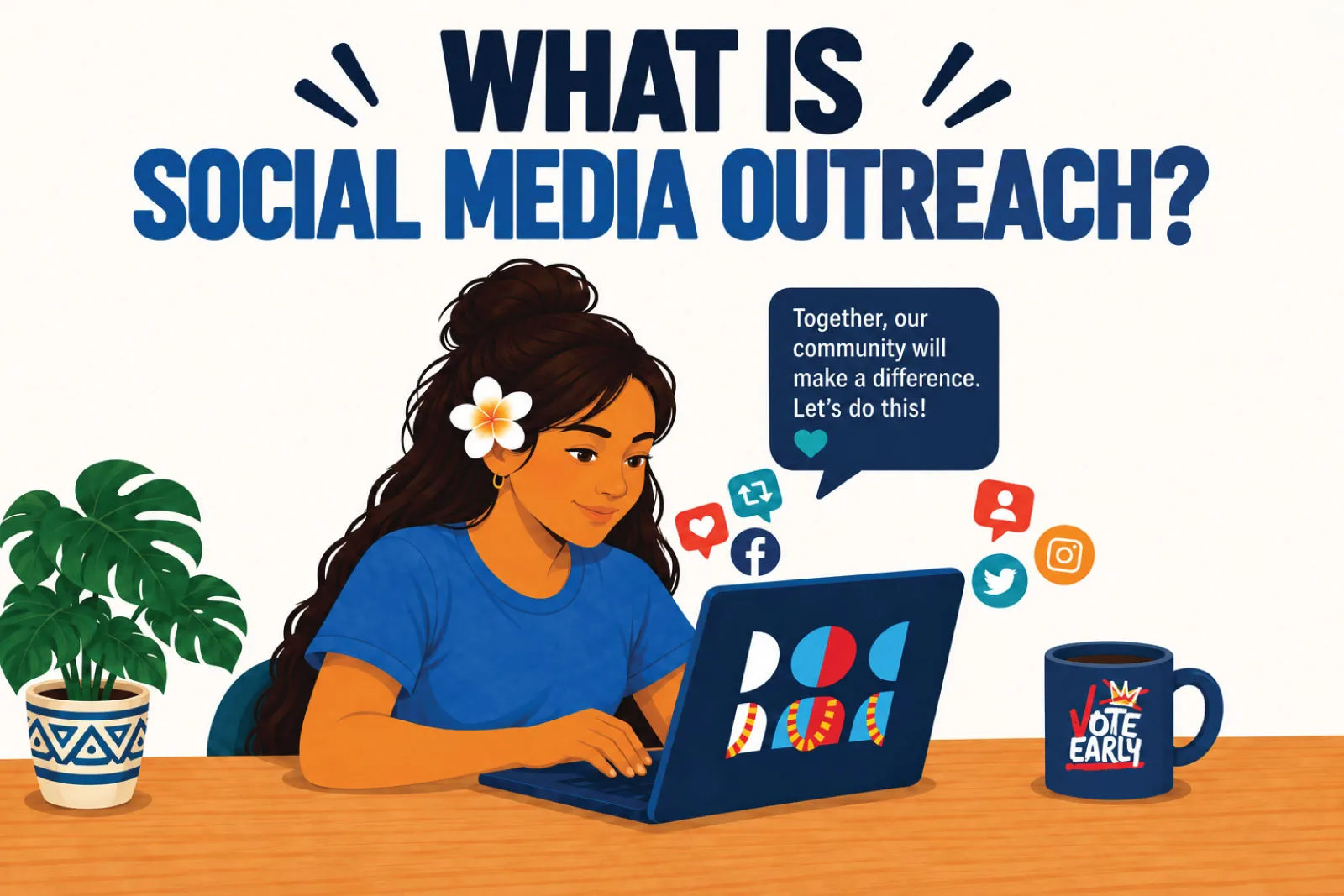
Social media isn't just for cat videos and vacation photos; it's a powerful tool to communicate with the people in your life about issues that matter to you.
The key is using social media strategically: not just broadcasting to everyone, but reaching out personally to the people who trust you and might actually listen.
Why your voice matters on social media
You have something that most campaigns and political organizations don't: trust. When a friend or family member sees a post from you, they don't tune it out the way they might ignore a campaign ad.
This is called relational organizing: people are influenced by the people they know — and you know people in places where elections are decided.
Approach #1: Share content that educates and mobilizes
The simplest way to use social media is to share content that helps people understand what's happening and what they can do about it. Here's what actually works:
Share useful resources: Post links to articles that explain complex issues — how to vote, how the levels of government work, how postcarding works, what's at stake in upcoming elections.
→ Find all resources on this page
Post about what you're doing: Show people what action looks like. "Wrote 30 postcards to Arizona voters today" with a photo. "Just signed up to canvas next month." "Testified on SB 2471 today — here's why it matters." People connect with real stories, not abstract calls to action.
Boost Indivisible Hawaiʻi updates: When we post about an event, a campaign update, or an urgent action, share it to your feed. Add why you care: "Submitting testimony on this bill tomorrow — it could change how elections work in Hawaiʻi."
→ Find our current initiatives here
Post less, but make it count: You don't need to post every day. Posting around key moments (testimony deadlines, voter registration deadlines, Election Day) or when there's important news keeps you visible without overwhelming your friends.
Approach #2: Reach out to specific people directly
Broadcasting is useful, but direct personal messages are even more powerful. This is where you move from posting to actually having conversations.
Keep it personal: This isn't a public announcement, it's a message to a friend. If you haven't talked to them in a while, reaching out is also an opportunity to catch up. An impersonal message could remind them to vote; a personal note could lead to a conversation with a ripple effect.
Make it easy for them: Don't just ask them to care. Give them something specific to do:
- "Want me to look up your polling location?"
- "Here's a 2-minute video explaining what's actually on the ballot"
- "Early voting starts Monday — are you free to go together?"
For friends and family in Hawaiʻi
Share local opportunities: "There's a testimony deadline coming up on affordable housing — want to submit something together?" or "I'm going to the postcard party Wednesday, want to join?"
Invite them to events: Personal invitations work better than public posts. "We're protesting at the Capitol Saturday — I know you care about this issue, want to come?"
Help them take action: "Voter registration for the primary closes next week — are you registered? Takes 2 minutes: [link]"
For contacts in swing states
Example: "I've been volunteering with Indivisible and we're working on [specific issue]. Since you're in Arizona, I thought you might care about this — the Senate race there could determine whether [issue] gets addressed or not."
Start with 3-5 people: Don't try to message everyone. Pick 3-5 people and focus on them. Build from there.
Keep it real: You're a friend who cares, not a campaign volunteer trying to engage a stranger. If they're not interested, drop it. The relationship matters more than the conversation.
What not to do
Don't lecture: Share information and tell stories. Don't tell people what to think.
Don't argue with strangers online: You won't change their mind, and you'll waste energy you could spend on people who actually know you.
Don't share without fact-checking: If you're not sure it's accurate, don't post it. Misinformation hurts more than it helps.
Don't burn relationships: If someone isn't receptive, let it go. Your friendship matters more than any single election.
Getting started
- Stay up-to-date: When you sign up for our newsletter, you can receive regular updates about initiatives and urgent calls to action. That way, you know when races get tight.
- Follow us on social media: We post content you can share and timely updates. Find us on Facebook, Instagram, Youtube, Threads, and Bluesky.
- Make a list: Who do you know in swing states or competitive districts? These are the people you can reach out to.
Your network is more powerful than you think. Start small, be genuine, and know that one conversation with someone who trusts you is worth a hundred campaign ads.